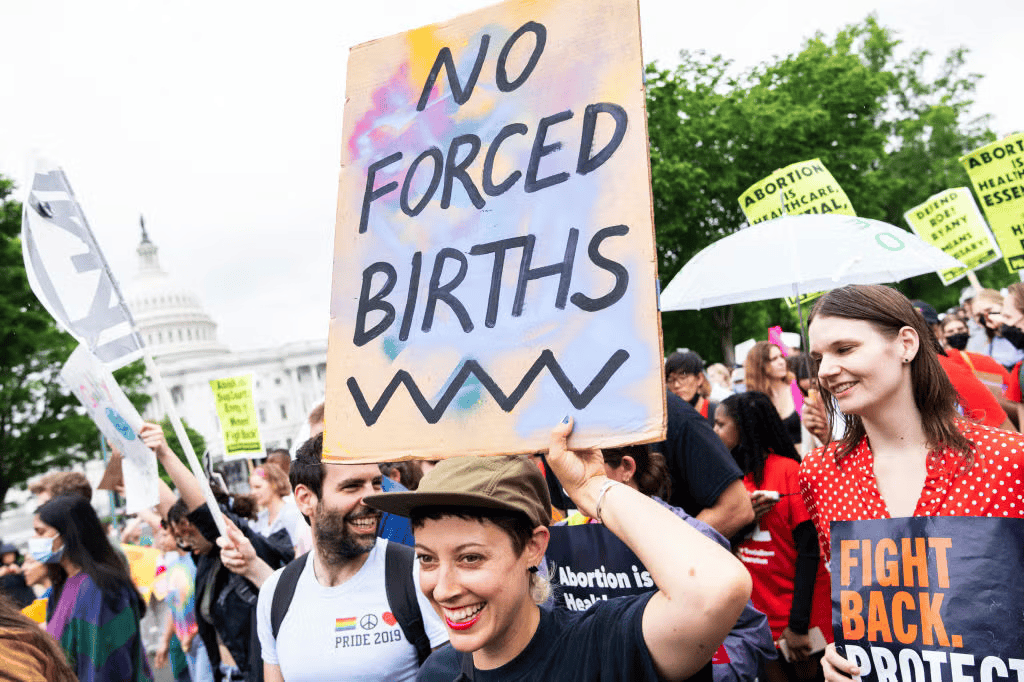
(Tom Williams / Getty Images, source)
A letter from MERJ’s co-founder
Reproductive Justice is About More than Abortion: Domestic Violence and the Fight for Bodily Autonomy
Dear MERJ Community:
At first glance, it might seem like domestic abuse and reproductive justice and freedom are unrelated. At their roots, though, both are about control: Domestic abuse is when a person uses violence to exercise power and control over a partner, and reproductive freedom describes a scenario where all people have the right to make and control decisions about their own bodies and fertility. These two issues are in fact deeply connected, and understanding that connection is essential to building safer, healthier communities.
CDC data shows that 6-20% of women will face intimate partner violence during pregnancy. And when considering the number of women who experience domestic violence or abuse within the first year after giving birth, that number increases to the heartbreaking figure of 17-25%. It is not an exaggeration or overstatement to say that access to reproductive healthcare can affect a survivor’s ability to navigate or leave an abusive relationship.
When someone cannot access contraception, abortion, or confidential medical care, an abusive partner may gain another means of control. In fact, domestic abuse often includes insidious practices that fall under the umbrella term “reproductive coercion”—interfering with a partner’s contraception, sabotaging their birth control medication or techniques, pressuring their partner to become pregnant or not to become pregnant, or forcing someone to continue or end a pregnancy against their wishes. Since the Dobbs decision, the National Domestic Violence Hotline has experienced a 1,000% increase in calls related to reproductive coercion.
We often think of “bodily autonomy” as the ability to make decisions about one’s own body with regard to having or not having an abortion. However, we must expand this definition to ensure birthing people can make decisions free from coercion and violence.
MERJ pushes men past being “pro-choice”; we challenge men to take a hard, critical look at their own lives and relationships, and to identify any attitudes and behaviors based on a presumption that men have the right to control their relationships and their partners unilaterally, and through force if necessary. We need men to recognize reproductive coercion when they see it, and to call it out, while simultaneously advocating for their partners’ and loved ones’ right to access the full range of reproductive healthcare. Reproductive justice cannot be achieved without addressing violence, coercion, and the conditions that prevent birthing people from exercising bodily autonomy.
Our role as men is not to make decisions for others, but to help cultivate and work towards the conditions in which everyone can make their own decisions safely and freely. We must all speak out about the many ways restrictions on access to reproductive healthcare can compound the challenges survivors of domestic abuse face every day.
In Solidarity,
The MERJ Team
PS: If you or someone you know is dealing with domestic abuse, support is available free of charge in the United States: The National Domestic Violence Hotline is available 24/7 at 800-799-SAFE (7233), by texting START to 88788, or at thehotline.org.
PPS: Want to help MERJ keep growing and helping men be better advocates for equity and reproductive justice for all? You can contribute to our work by making a donation HERE.
📖 5 Minute Power Read from MERJ Co-Founder Justin Haas:
“Faithfully Yours: The Borderlands of Reproductive Justice”
Excerpt: “A line on a map can determine what you are allowed to do with your own body. Cross a border, and the rules can change—even when nothing else does. The landscape is the same. The people are the same. The need for care is the same. Only the law changes, drawing an invisible boundary around who gets to make decisions for themselves. For reproductive healthcare, this is increasingly the map of America. One state provides abortion care while the state next door prohibits it. People travel because care has been restricted, their autonomy denied, and their choices placed under state control.”
🎥🍿 Power Watch Recommendation:
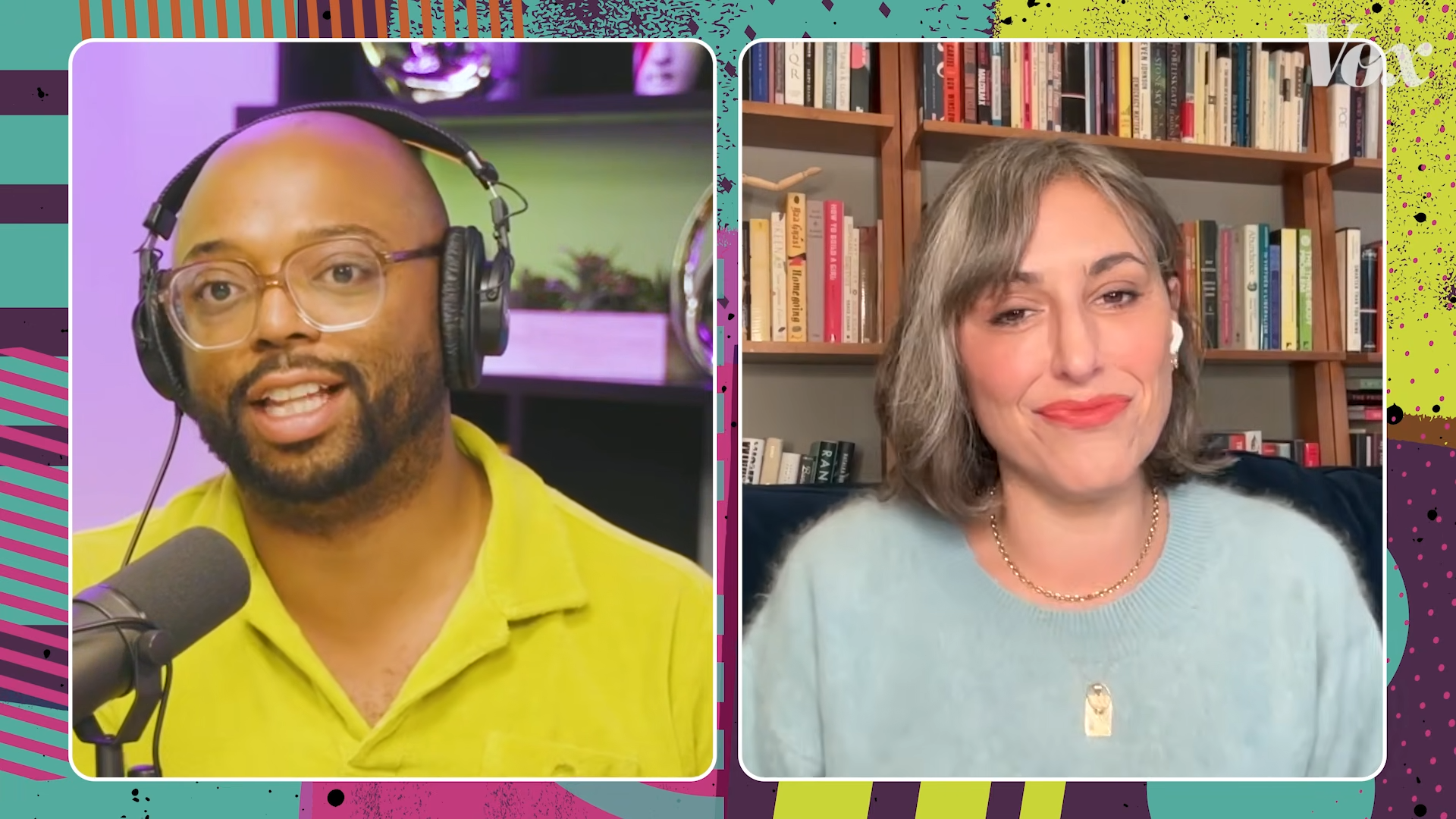
Vox’s “America, Actually” video podcast, October 6, 2026 (39 minutes)
Featuring MERJ Co-Founder Justin Haas and Friend of MERJ rev. jessica young chang as interviewees!
“Jessica Valenti says Democrats are playing it too safe on abortion. As the founder of Abortion, Every Day on Substack, she said the party should treat abortion rights as a matter of affordability, healthcare, and personal freedom, and make a stronger case for keeping the government out of decisions about pregnancy. In this special episode of ‘America, Actually,’ Valenti joins Vox’s Astead Herndon for a conversation about why support for abortion rights hasn’t always translated into Democratic victories, the consequences of abortion bans, and how Republicans are changing their rhetoric while continuing to pursue restrictions. They also discuss threats to birth control, the stakes of the midterms, and why Valenti wants Democrats to go beyond promising to ‘restore Roe’ in 2028..”
💸 Amazing Organization to Support:

Esperanza Shelter
(Santa Fe, NM)
From their website: “Our mission is to create a world where HOPE (Healing, Opportunity, Partnership, and Empowerment) is the foundation of all our efforts. We strive to inspire and uplift those affected by domestic violence, fostering an environment where support, self-determination, authenticity, commitment and compassion are at the heart of everything we do.”
MERJ is proud to encourage and stand alongside Esperanza Shelter in their important and inspiring non-profit work. Please donate to support them today!
📚 MERJ Book Club!
If you’re interested in joining one of our future book discussions, email us at action@endthepatriarchy.org, and we’ll be happy to invite you!
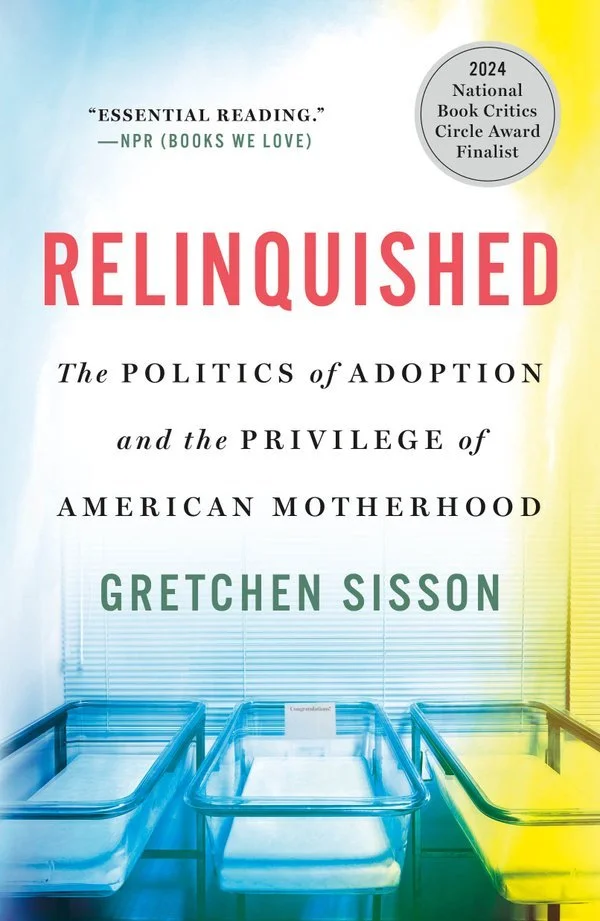
Originally published March 17, 2026; notes below from bookshop.org web page.
A powerful decade-long study of adoption in the age of Roe, revealing the grief of the American mothers for whom the choice to parent was never real. Adoption has always been viewed as a beloved institution for building families, as well as a mutually agreeable common ground in the abortion debate, but little attention has been paid to the lives of mothers who relinquish infants for private adoption. Relinquished reveals adoption to be a path of constrained choice for those for whom abortion is inaccessible, or for whom parenthood is untenable. The stories of relinquishing mothers are stories about our country's refusal to care for families at the most basic level, and to instead embrace an individual, private solution to a large-scale, social problem.
Other books we’ve read, and strongly recommend:
Men and Abortion: Lessons, Losses, and Love, by Arthur B. Shostak, Lynn Seng, and Gary McLouth
Killing the Black Body: Race, Reproduction, and the Meaning of Liberty, by Dorothy Roberts
Abortion: Our Bodies, Their Lies, and the Truths We Use to Win, by Jessica Valenti
Ejaculate Responsibly: A Whole New Way to Think About Abortion, by Gabrielle Blair
Comics for Choice, ed. Newlevant, Taylor, and Fox
You’re the Only One I’ve Told: The Stories Behind Abortion, by Dr. Meera Shah
Undivided Rights: Women of Color Organize for Reproductive Justice, by Silliman, Gerber Fried, Ross, and Gutiérrez
Reproductive Justice: An Introduction, by Loretta J. Ross and Rickie Solinger
Birthing Liberation: How Reproductive Justice Can Set Us Free, by Sabia Wade
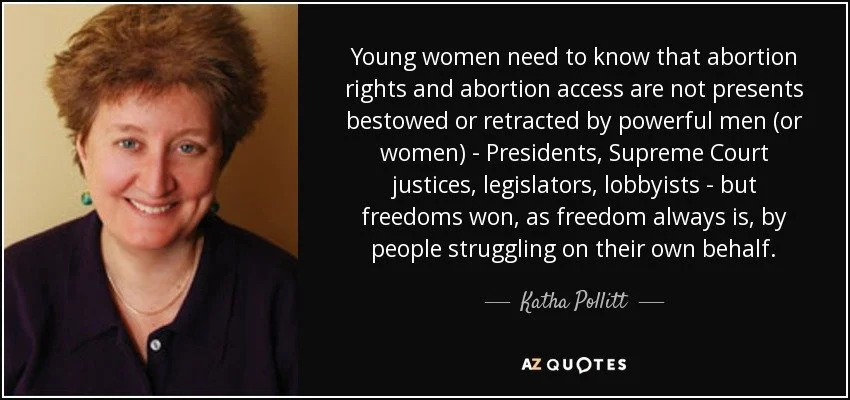
Help and Resources to Share with Anyone Needing an Abortion: (from ifwhenhow.org)
Find a local clinic by using the National Abortion Federation map.
If you have questions about your legal rights and self-managed abortion, the Repro Legal Helpline is a free, confidential source for legal advice and information. Visit ReproLegalHelpline.org or call 844-868-2812.
If you are under 18 and need information about your rights to an abortion, you can message or call our Repro Legal Helpline at 844-868-2812. You can also read more about your rights on our Judicial Bypass Wiki.
If you have been arrested, contacted by the police, or fear you may be arrested for a self-managed abortion, our Repro Legal Helpline can provide immediate legal advice and support, and our Repro Legal Defense Fund can help with bail and legal fees. You can call our Repro Legal Helpline at 844-868-2812, and for help with bail and other fees, visit ReproLegalDefenseFund.org.
Medically-reviewed, step-by-step directions for how to self-administer a medication abortion using mifepristone and misoprostol can be found on the Hey Jane website.
